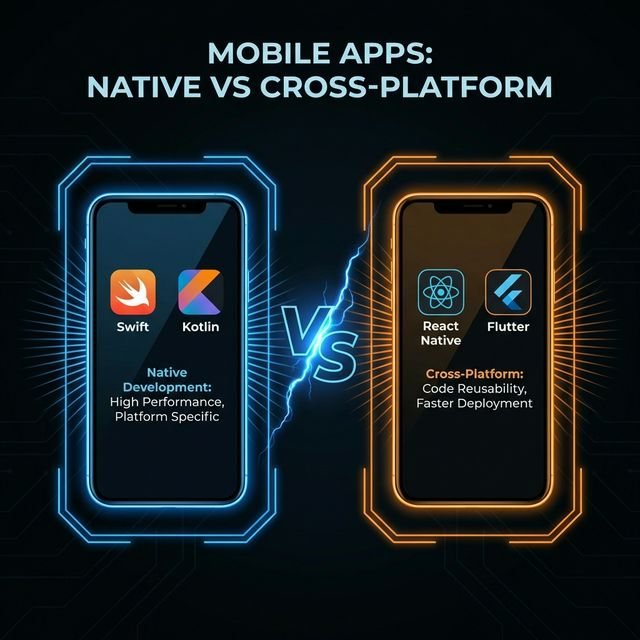
When starting a mobile app project, the first and most critical decision you'll face is choosing between Native and Cross-Platform development. This choice impacts your budget, timeline, performance, and future scalability. Let's break it down.
What is Native App Development? 🍎🤖
Native development means building separate apps for each operating system (iOS and Android) using their specific programming languages and tools.
- iOS: Swift or Objective-C (using Xcode).
- Android: Kotlin or Java (using Android Studio).
Pros:
- High Performance: Direct access to the device's hardware (GPU, GPS, Camera) makes native apps incredibly fast and responsive.
- Superior UX: Native apps follow the specific design guidelines of each OS, feeling intuitive and "at home" for users.
- Full Feature Access: No limitations in accessing advanced device features like ARKit or specific sensors.
Cons:
- Higher Cost: You effectively build two apps, requiring double the resources.
- Slower Time to Market: Developing two separate codebases takes longer.
What is Cross-Platform Development? 🌉
Cross-platform development allows you to write code once and run it on both iOS and Android. Popular frameworks include Flutter (by Google) and React Native (by Meta).
Pros:
- Cost-Effective: One codebase means a smaller team and lower development costs.
- Faster Launch: "Write once, run anywhere" significantly speeds up development, getting your MVP to market faster.
- Consistent UI: Easier to maintain a consistent brand look across both platforms.
Cons:
- Performance Gap: While modern frameworks are fast, they may struggle with extremely graphics-heavy apps compared to native code.
- Delayed Feature Support: When a new OS feature launches, it might take time for the framework to support it.
Which One Should You Choose? 🤔
Choose Native if:
- You are building a high-performance game or AR/VR app.
- Budget is not a primary constraint.
- You need deep integration with specific hardware features.
Choose Cross-Platform if:
- You are a startup or SME with a limited budget.
- You need to launch quickly (Time-to-Market is key).
- Your app is primarily content-based (e-commerce, social media, utility).
Conclusion
There is no "wrong" choice, only the right choice for your specific needs. At Pixel Wave, we specialize in both. Whether you need the raw power of Native or the efficiency of Cross-Platform, we can bring your vision to life.